Schedule Your Appointment
Call our Conroe office at (936) 317-3541 or book directly online. Let the front desk know if you'd like to include dilation, or if your previous eye doctor recommended it at your last visit.
Book your appointment1201 Lake Woodlands Dr #1000, Spring, TX
7540 Cypress Creek Pkwy, Houston, TX
2956 I-45N #700B, Conroe, TX
936-317-3541
Getting a dilated eye exam is one of the most important things you can do for your long-term eye health. At Superior Eye Care's Conroe location on Interstate 45, our optometrist performs thorough pupil dilation as part of a complete evaluation, giving us a clear view of structures inside the eye that simply can't be assessed any other way.
4.98 Google Rating
Trusted patient care
20+ Years Experience
Serving North Houston
18,000+ Patients
Care across our locations
Most Insurance Accepted
Vision & medical plans
Ages 5 and Up
Family eye care
During a dilated eye exam, your optometrist places dilating drops into each eye. These drops temporarily enlarge the pupil — the dark opening at the center of your iris — so that significantly more light can enter. That expanded opening allows the doctor to examine the retina, optic nerve, macula, and vitreous with a level of clarity not possible during a standard non-dilated visit.
The drops typically take 20 to 30 minutes to take full effect. Once they do, your doctor can use specialized lenses and instruments to evaluate the health of the structures at the back of your eye. You'll experience light sensitivity and blurry near vision for a few hours afterward, so planning your appointment accordingly is a good idea.
Think of dilation as the difference between looking into a room through a keyhole versus walking in through an open door. It's the same eye — but the view is completely different.
Several serious eye conditions develop gradually and cause no noticeable symptoms in their early stages. Without dilation, changes to the optic nerve, retina, or blood vessels can go undetected until significant damage has already occurred.
Early detection through regular dilation gives you and your eye doctor the best opportunity to monitor, manage, or address any developing ocular health concerns before they progress. Patients managing diabetes, high blood pressure, or a family history of glaucoma are often advised to schedule a dilated exam at least once a year. Our Conroe optometry team can recommend the right frequency for your specific situation based on your health history.
Schedule your Conroe dilated eye examYour visit at our Conroe office follows a straightforward process so you know exactly what you're walking into.
Call our Conroe office at (936) 317-3541 or book directly online. Let the front desk know if you'd like to include dilation, or if your previous eye doctor recommended it at your last visit.
Book your appointmentDr. Matthew Stancea, O.D. will begin with a comprehensive eye exam that includes a review of your health history, vision testing, and an assessment of your eye pressure using a non-contact method. Dilation drops are then administered, and you'll wait comfortably while they take effect.
Once your pupils are fully dilated, Dr. Stancea uses specialized lenses to examine the retina, optic nerve, macula, and surrounding structures. The actual examination typically takes only a few minutes per eye. Afterward, he'll walk you through the findings and discuss any next steps, monitoring recommendations, or referrals if needed.
The dilation effect — light sensitivity and blurry near vision — lasts approximately two to four hours for most adults. We recommend bringing sunglasses and arranging a ride if you're sensitive to driving after dilation. Our Conroe team will make sure you leave with clear instructions.
Book your visit with our Conroe eye care team at our Interstate 45 location.
Dilation is recommended for most patients during a complete eye evaluation, and it can be particularly important when age, medical history, symptoms, or other risk factors call for a closer look at the health of the inside of your eyes.
Children and teenagers can also benefit from dilation in certain cases. Our Conroe team sees patients starting from age five and will let you know if dilation is appropriate for your child based on their exam findings.
If you're unsure whether dilation is right for you at your next eye exam, our Conroe eye care team can review your health history, symptoms, and previous exam findings with you.
Book Your Conroe Eye ExamDilation is one part of the broader eye care services we offer at our Interstate 45 location. Our Conroe optometry practice provides complete vision and ocular health care for the whole family.
Contact lens fittings with standard, specialty, and scleral lens options based on your vision and ocular health needs.
Explore Contact Lens FittingsEvaluation and ongoing co-management to identify and monitor changes associated with glaucoma and optic nerve health.
Eye pressure testing to help evaluate an important component of glaucoma risk and overall ocular health.
Learn About Eye Pressure TestingEvaluation and management for patients experiencing dryness, irritation, burning, or other dry eye symptoms.
Accurate prescriptions for glasses and contact lenses based on your vision testing and individual correction needs.
Testing that measures peripheral and central vision to help assess changes that may not be noticeable during daily activities.
Digital retinal imaging that helps document and evaluate structures at the back of the eye as part of ocular health care.
Pre-consultation and optometric co-management for patients considering LASIK vision correction.
Patients throughout Conroe, Willis, New Waverly, and the broader Montgomery County area can access consistent, personalized optometric care at our Interstate 45 location without driving into the city.
Learn more about the complete vision and ocular health services available from the Superior Eye Care team in Conroe.
Your dilated eye exam is performed with careful attention to retinal health, optic nerve evaluation, and clear communication about what your doctor sees during the examination.

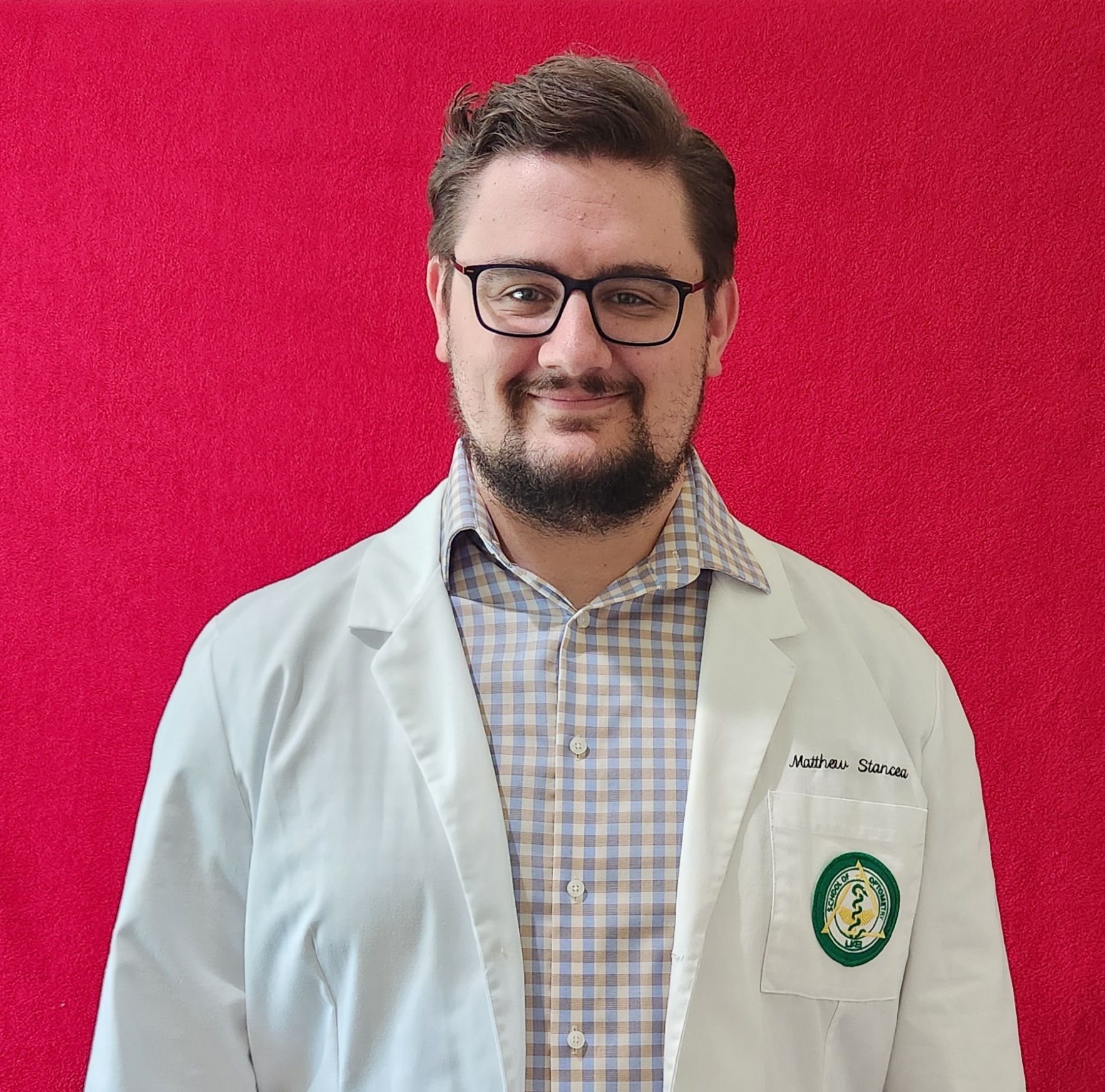
Therapeutic Optometrist · Superior Eye Care
Dr. Matthew Stancea is a therapeutic optometrist with a Doctor of Optometry degree from the University of Alabama at Birmingham School of Optometry. His clinical approach places a strong emphasis on helping patients understand the health of their eyes and the findings from their examination.
During your dilated eye exam in Conroe, Dr. Stancea evaluates the retina, optic nerve, macula, and surrounding structures, then explains the findings and discusses any monitoring recommendations or next steps with you.

Therapeutic Optometrist
Clinical eye care
UAB Trained
Doctor of Optometry
Ocular Health Focus
Retina & optic nerve
Conroe Eye Care
Interstate 45 location
Medically reviewed by Dr. Matthew Stancea, O.D.
Get clear answers to common questions about pupil dilation, recovery time, driving, insurance coverage, and what your eye doctor can evaluate during a dilated exam.
No. The dilating drops may sting briefly when first applied, but the discomfort passes within a few seconds. The examination itself is non-invasive and painless. Most patients find the light sensitivity afterward to be the most noticeable part of the experience.
Many patients drive after dilation without difficulty, particularly if they wear sunglasses. However, if you find bright light or blurry near vision distracting, arranging a ride is a sensible choice. Ask our Conroe team what to expect based on your individual response to the drops.
For most adults, the effects of dilation — light sensitivity and difficulty focusing on close objects — last between two and four hours. In some patients, particularly those with lighter-colored irises, the effect may last slightly longer.
Not always. Your optometrist will recommend dilation based on your age, health history, symptoms, and when you last had a dilated exam. Some patients require it annually; others may go longer between dilated visits. Dr. Stancea will guide you on the right schedule at your appointment.
Dilation allows your eye doctor to evaluate the retina, macula, optic nerve, and vitreous — structures only visible through an adequately opened pupil. It's the primary tool for detecting conditions like glaucoma, diabetic retinopathy, macular degeneration, retinal tears, and hypertensive retinopathy at an early stage.
In many cases, medical insurance covers dilated eye exams when they are medically indicated — for example, in patients with diabetes or a diagnosed eye condition. Vision insurance plans may also cover dilation as part of a routine annual exam. Our Conroe team can help verify your coverage before your appointment.
Yes. Dilation can be performed safely in children and is sometimes recommended when a doctor needs a more accurate measure of refractive error or wants to evaluate the health of the posterior segment. Our Conroe office sees patients starting from age five.
Our Conroe eye care team can answer questions about dilation, appointment preparation, recovery time, and what to expect during your visit.
Schedule Your Conroe Eye ExamYour eyes don't always signal a problem until damage has already occurred. A dilated eye exam at our Conroe location is one of the most reliable ways to catch early changes and protect your vision over time.
Dr. Matthew Stancea, O.D. and our Conroe eye care team are ready to help you get the complete picture of your ocular health.
Conveniently serving patients throughout Conroe, Willis, New Waverly, and Montgomery County, TX from our Interstate 45 location.
Specialized glaucoma care is available across Greater Houston at our Willowbrook, The Woodlands / Spring, and Conroe locations.

The #1 Optometrist in The Woodlands , Willowbrook, and Conore